

This post used to be called "Mazafati Dishes Are the Healthiest Foods on Earth". No source ranks foods that way, and most of the old text had no source: a wartime origin story, a cure for eye problems, asthma and infertility, and a list of vitamins the fruit barely contains. What follows is what can be checked about Mazafati: what it is, what a 100 g serving holds, what studies on dates have measured, and a few plain ways to cook with it.
This is general information, not medical advice. If you have diabetes or another health condition, or you take regular medicine, ask your doctor before you change your diet.
What Mazafati is
Mazafati is a date from Bam, in Kerman province, Iran. In Malaysia it is often sold as Rotab Mazafati Bam or kurma madu, and you may also see it listed as Iranian bam dates. It is dark, very soft and high in moisture, so it needs to be kept in the fridge. It is cold-stored, which is why it is sold all year round. The old text described Mazafati as a Middle Eastern dessert with brown-and-green stripes. It is a fruit, not a dessert, though Mazafati dates can go into one.
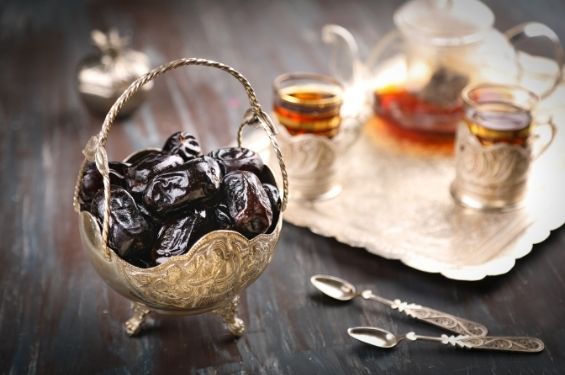
What 100 g of Mazafati holds
USDA FoodData Central has one record named "Mazafati dates". It is a branded product (brand owner Sadaf, sold in the United States), so the figures come from the pack label rather than a USDA lab analysis. Per 100 g it lists:
- Energy: 285 kcal
- Carbohydrate: 75 g, of which sugars 65 g
- Fibre: 7 g
- Protein: 2 g
- Fat: 0.5 g
- Potassium: 696 mg
- Calcium: 64 mg
- Iron: 0.9 mg
That label lists no vitamins apart from vitamin D (0). For those, the USDA's analysed record for Medjool dates, another soft date, is the nearest check. It gives 0.0 mg of vitamin C and 7 µg of vitamin A (RAE) per 100 g. The NHS says adults need 40 mg of vitamin C a day and 700 µg of vitamin A a day for men and 600 µg for women. So the old claim of "lots of vitamins A, C, E" does not hold. The USDA record for Deglet Noor dates lists 0.05 mg of vitamin E per 100 g, which is close to none.
The old text also said it has more protein than any other dessert fruit and is very low in calories. At 2 g of protein and 285 kcal per 100 g on the label, neither is true. Where the numbers are good is fibre and potassium. The NHS counts foods with 6 g or more of fibre per 100 g as high-fibre, and adults need 3,500 mg of potassium a day, so 100 g covers about a fifth of that.
What the studies on dates found
A PubMed search for "mazafati" returned 8 records on 20 October 2026. They cover growing, storage, packaging and residue testing. None is a trial of people eating the fruit, so the health evidence below comes from studies on dates in general, and none of them names Mazafati.
The World Health Organization says increasing potassium intake significantly reduces blood pressure in adults, and it names dates among the fruits that contain potassium. That is evidence about potassium across the whole diet. When dates themselves were tested in a 2022 randomised trial, 79 adults with type 2 diabetes ate either 60 g of dates or 60 g of raisins a day for 12 weeks, and 61 finished. There was no difference in blood pressure, blood lipids or blood sugar measures.
In a 2020 randomised trial, 100 adults with type 2 diabetes ate three dates a day for 16 weeks while a control group avoided dates. Total cholesterol fell by 0.209 mmol/L in the date group. LDL fell by 0.171 mmol/L, but its 95% confidence interval (−0.358 to 0.016) crosses zero. HbA1c did not change. In a 2009 pilot study, 10 healthy adults ate 100 g a day of Medjool or Hallawi dates for 4 weeks, with no significant change in total, LDL or HDL cholesterol, while triglycerides fell by 8% and 15%.
The NHS says eating plenty of fibre is associated with a lower risk of heart disease, stroke, type 2 diabetes and bowel cancer, and adults should aim for 30 g a day. That is fibre from your whole diet. The old list of benefits for eyesight, kidneys, bones, ageing and weight control was not tested in any study cited here, so it has been removed, along with the claims about the leaves of the palm.
Cooking Mazafati dishes at home
Mazafati is very soft, so once the stones are out it is easy to chop or mash into food.
- Oats: stir two or three chopped dates into a bowl of hot porridge, which the NHS names as a good source of fibre, in place of sugar or syrup.
- Dressing: blend one stoned date with olive oil, lemon juice and a pinch of salt for a salad dressing. Make a small batch and keep it chilled.
- With a main meal: chop a few into a rice or grain salad with herbs and nuts, or serve them on the side of a curry.
- After a meal: two or three dates with a few almonds or walnuts at the end of lunch.
The NHS counts a 30 g portion of dried fruit, dates included, as one of your 5 A Day, and says it should be eaten at mealtimes, not as a snack between meals, to reduce the impact on teeth. Its fibre page says the same about sticky dried fruit and tooth decay, which is why every idea above goes with a meal. At 285 kcal per 100 g on the label, a 30 g portion is about 86 kcal. For more meal ideas with dates, see this site's whole-food recipes with dates, and for the evidence on other common claims, the post on dates and overall wellness.
On the numbers, Mazafati is a soft, very sweet date with useful fibre and potassium, and very little vitamin C, vitamin A or protein. A 30 g portion with a meal counts as one of your 5 A Day. Keep the rest in the fridge.
References
- USDA FoodData Central. Mazafati dates, Branded Foods record 1139274 (brand owner Sadaf, published 2020). Dates, medjool (168191) and Dates, deglet noor (171726), SR Legacy, 2019.
- World Health Organization, eLENA. Increasing potassium intake to reduce blood pressure and risk of cardiovascular diseases in adults.
- Butler AE, et al. Effect of date fruit consumption on the glycemic control of patients with type 2 diabetes: a randomized clinical trial. Nutrients. 2022;14(17):3491. PMID 36079749
- Alalwan TA, et al. Effects of daily low-dose date consumption on glycemic control, lipid profile, and quality of life in adults with pre- and type 2 diabetes: a randomized controlled trial. Nutrients. 2020;12(1):217. PMID 31952131
- Rock W, et al. Effects of date (Phoenix dactylifera L., Medjool or Hallawi variety) consumption by healthy subjects on serum glucose and lipid levels and on serum oxidative status: a pilot study. J Agric Food Chem. 2009;57(17):8010-7. PMID 19681613
- NHS. Vitamin C; Vitamin A; Others (potassium).
- NHS. How to get more fibre into your diet.
- NHS. 5 A Day: what counts?