
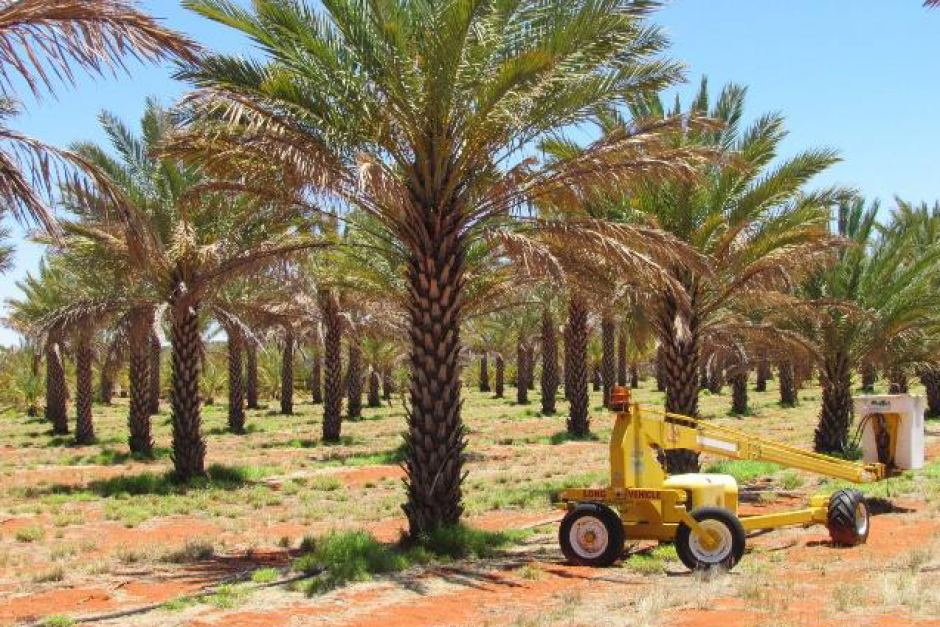
Where date palms actually grow, and why
The date palm, Phoenix dactylifera, is native to the Middle East and North Africa and has been cultivated there for thousands of years — modern production is concentrated in Iran, Iraq, Saudi Arabia, Egypt, Algeria and the UAE, with newer commercial groves in the US and Pakistan. It thrives in exactly the conditions that would kill most fruit trees: hot, dry air and intense sun, provided the roots can reach water. That is why traditional groves sit at oases or along irrigation channels — the tree tolerates a punishing climate above ground as long as it is not thirsty below it.
Commercial growers almost never plant from seed. A seed-grown palm takes years longer to fruit and produces unpredictable, often poor-quality dates, so established date-palm growers propagate Mazafati and other varieties from offshoots — small clones cut from the base of a proven mother tree — to guarantee the variety and quality.
Male and female trees, and why pollination is manual
Date palms are dioecious: a tree is either male or female, and only the female trees bear fruit. In a natural desert setting wind carries enough pollen, but commercial groves hand-pollinate to get a reliable, heavy crop — a worker climbs each female tree during the short flowering window and applies pollen collected from male trees directly to the flower clusters. It is labour-intensive, which is part of why good dates carry a real price rather than a bargain-bin one.
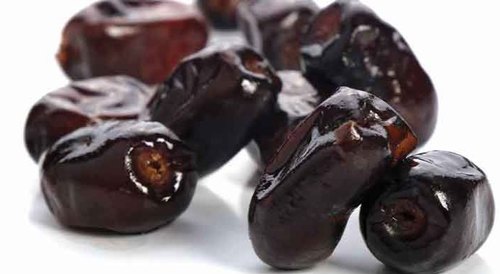
From green fruit to the dried date on the shelf
Dates pass through four recognised stages before they reach a buyer: kimri (hard, green, unripe), khalal (full-size, crunchy, yellow or red), rutab (soft, brown, partially ripened) and tamr (fully ripe, sun-dried or semi-dried). Harvest timing depends on which stage a variety is sold at — Mazafati is typically picked and sold at the rutab stage, soft and moist, while varieties like Zahedi are left to reach the drier tamr stage before harvest. In most of the Middle East and Iran the main harvest runs from late summer into autumn, roughly August to October.
A date palm can produce for over sixty years once established, and a mature tree yields somewhere between 40 and 90kg of fruit a season depending on variety, age and care — which is why a well-tended, decades-old grove is a genuine asset, not just a plant — and why buying from a grower with that track record matters more than shopping on price alone.