

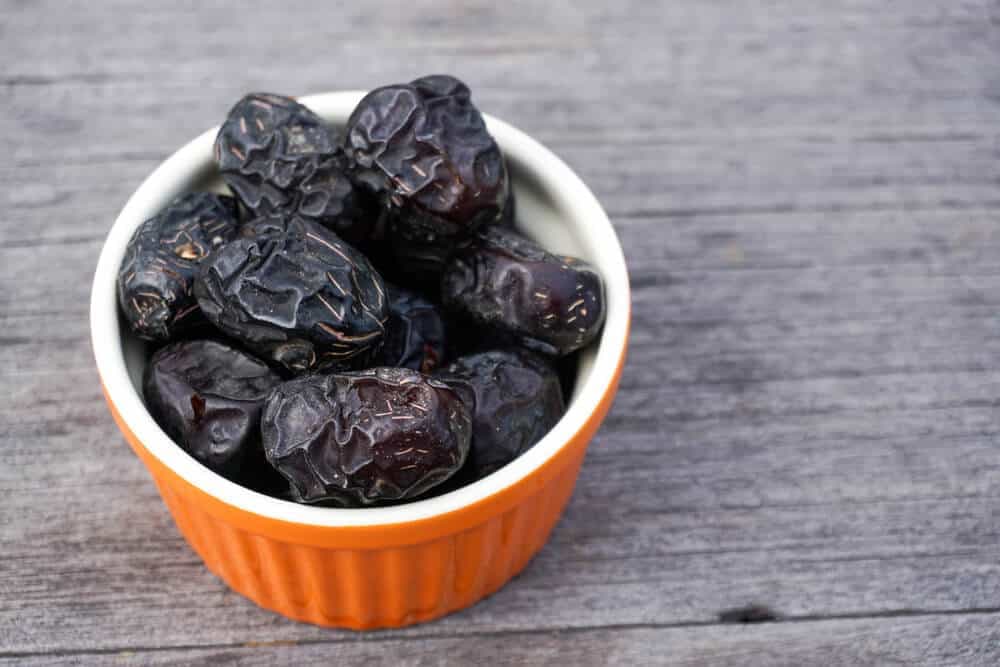
Dates, including varieties such as kurma ajwa, have been an everyday food across the Middle East and North Africa for centuries, and many families there still give them to women in late pregnancy. A handful of clinical studies has now looked at whether eating dates in the last weeks before birth changes how labour goes. Some results look encouraging, but the studies are small and reviewers rate the overall evidence as poor. This article sets out what the research on dates for pregnant women actually found, how many dates the studies used, and what the nutrition numbers say.
This article is general information, not medical advice. Talk to your midwife or doctor before changing your diet in pregnancy, especially if you have gestational diabetes.
What happens to the cervix before labour
Before and during labour the cervix softens, thins and opens. This process, known as cervical ripening, determines how readily the cervix will open during contractions. The date studies measured it as cervical dilation on admission to hospital and, in some trials, the Bishop score, which is why the cervix comes up so often in articles about dates.
Claims about how dates work
You will often read that dates contain compounds that act like oxytocin, or that their tannins soften the cervix. We could not find a study in pregnant women that shows either of these. The trials below measured outcomes such as cervical dilation and the need for induction. None of them showed how dates might cause those results.
Energy
Labour is hard physical work. Dates are mostly sugar: 100 g has about 277–282 kcal and 75 g of carbohydrate, according to USDA FoodData Central (Medjool, Deglet Noor). A 2011 study in Nutrition Journal measured glycemic index values of about 44 to 55 for five date varieties in healthy adults and in people with type 2 diabetes, which is in the low range. That means the sugar is absorbed more slowly than pure glucose. It does not make dates a free food for someone watching their blood sugar.
Bishop score findings
A 2024 systematic review and meta-analysis pooled 48 studies of dates around birth. Women who ate dates in late pregnancy had more cervical dilation on admission and higher Bishop scores, and fewer of them needed induction. The same review rated the overall quality of the evidence as unacceptable, found a high risk of bias in most studies, and noted that safety was recorded in only four trials. Its authors call for better-designed studies before dates can be recommended as care.
The clinical studies on dates and labour
The study most articles quote is Al-Kuran and colleagues (2011) from Jordan. It compared 69 women who ate six dates a day for four weeks before their due date with 45 women who ate none. It was not randomised.
Induction and intact membranes
In that study, 28% of the women who ate dates needed prostin or oxytocin to start or speed up labour, against 47% of those who did not. Labour started on its own in 96% versus 79%, and more of the date group still had intact membranes on admission (83% versus 60%). The authors concluded that the result warrants a randomised controlled trial. The NHS page on inducing labour says there is no evidence that certain foods or drinks trigger labour, and that induction will be offered if labour has not started by 41 weeks. Dates are not a substitute for that advice.
Length of labour
Al-Kuran found that the latent phase of the first stage of labour, the early slow part, averaged 510 minutes in the date group against 906 minutes in the other group. The later delivery outcomes were better but not significantly so. The 2024 review also found shorter labour in pooled studies, except for the second stage, but with the same weak evidence. For babies, it found too little data to pool, and most newborn outcomes were not much different between groups.

How many dates the studies used, and when
There is no official recommendation. The figures people quote come from the studies themselves.
Timing
Al-Kuran asked women to start four weeks before their estimated due date, which is around 36 weeks of gestation. Starting earlier was not tested in that study, and the 2024 review found that safety was reported in only four trials.
Six dates a day
The number usually quoted is six dates per day, because that is what the Al-Kuran study used. Date size matters. One pitted Medjool weighs about 24 g and one Deglet Noor about 7.1 g (USDA), so six Medjool come to roughly 144 g and 400 kcal, while six Deglet Noor are about 43 g and 120 kcal. If you have gestational diabetes, which the NHS describes as high blood sugar that develops during pregnancy, ask your diabetes team before adding dates every day. Whole, in a smoothie or rolled into energy balls, the sugar is the same. If you plan to buy Ajwa for the last month, checking the kurma ajwa harga first helps, because six a day for four weeks is about 170 dates.
Other nutrients in dates
Dates also carry some minerals and fibre. The amounts are useful but modest, so they are one fruit among many rather than a supplement. Our longer piece on dates in the third trimester covers milk supply and bleeding after birth.
Potassium and magnesium
100 g of dates has 656–696 mg of potassium (USDA). The NHS says potassium helps control the balance of fluids in the body and helps the heart muscle work properly, and adults need 3,500 mg a day. The same 100 g has 43–54 mg of magnesium, against the NHS figure of 270 mg a day for women. Magnesium is often said to prevent leg cramps in pregnancy, but the NHS advice on cramp in pregnancy is regular gentle exercise, especially ankle and leg movements, and it does not name a food.
Iron
The NHS says that in pregnancy iron deficiency anaemia is most often caused by a lack of iron in the diet. Dates have only about 0.9–1.0 mg of iron per 100 g (USDA), against an NHS figure of 14.8 mg a day for women aged 19 to 49. The 2024 review found higher haemoglobin in women who ate dates in the third trimester, again with low-quality evidence. If you are low in iron, follow your midwife's advice on tablets. The NHS says orange juice after an iron tablet may help absorption, and that large amounts of tea, coffee and milk make iron harder to absorb.
Fibre and constipation
Pregnancy often brings digestive challenges, particularly constipation. The NHS suggests eating foods high in fibre, including fruit, and exercising regularly. Dates have 6.7–8 g of fibre per 100 g (USDA), so a few a day add to that. The NHS also notes that iron supplements can make you constipated.
Conclusion
Dates for pregnant women are a reasonable late-pregnancy snack with some fibre and potassium. The labour studies, led by a 2011 trial of six dates a day from about 36 weeks, found less induction and more dilation on admission, but reviewers rate the evidence as weak and say better trials are needed. Watch the calories and sugar, check with your midwife if you have gestational diabetes, and keep to the induction plan your care team offers.
References
- Al-Kuran O, et al. The effect of late pregnancy consumption of date fruit on labour and delivery. J Obstet Gynaecol. 2011;31(1):29-31. doi:10.3109/01443615.2010.522267. PubMed 21280989
- Salajegheh Z, et al. Is oral consumption of dates in the peripartum period effective and safe integrative care to facilitate childbirth and improve perinatal outcomes: a comprehensive revised systematic review and dose-response meta-analysis. BMC Pregnancy Childbirth. 2024;24(1):12. doi:10.1186/s12884-023-06196-y. PubMed 38166785
- Alkaabi JM, et al. Glycemic indices of five varieties of dates in healthy and diabetic subjects. Nutr J. 2011;10:59. doi:10.1186/1475-2891-10-59. PubMed 21619670
- USDA FoodData Central: Dates, medjool (168191); Dates, deglet noor (171726).
- NHS: Inducing labour; Common health problems in pregnancy; Iron deficiency anaemia; Iron; Vitamins and minerals: others; Gestational diabetes.