
Most adults don't hit their daily fibre target — it's one of the more common gaps in an ordinary diet, and closing it is mostly a matter of habit, not a special product.
Where fibre actually comes from
Whole fruit (with the skin, where edible), vegetables, legumes, oats, and whole grains carry most of a typical diet's fibre. Juicing or peeling removes a lot of it — an apple has more fibre than apple juice, and a bowl of oats more than a bowl of cornflakes. The pattern is simple: less processing generally means more fibre kept intact.
Dried fruit as a fibre source
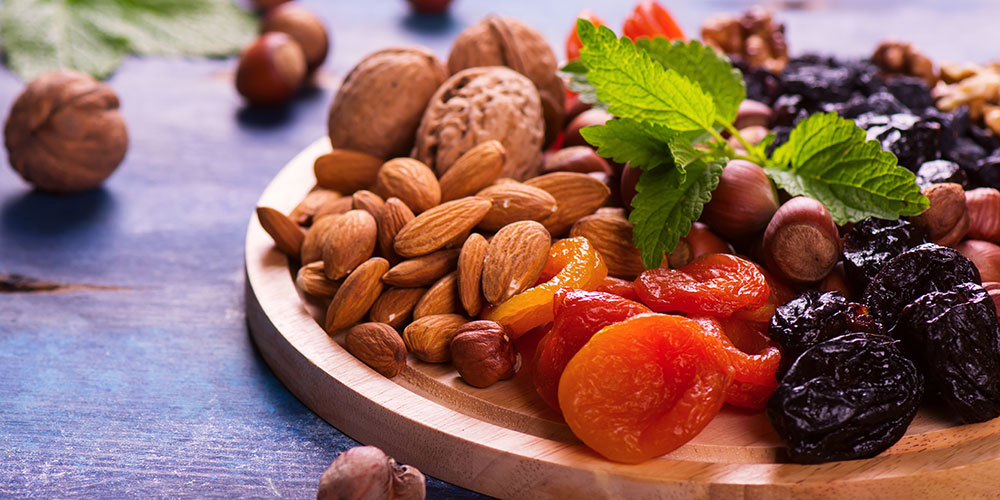
Dates are one of the more fibre-dense dried fruits — a handful carries a meaningful share of a daily target, mostly as insoluble fibre, the kind that adds bulk to a meal. They're also calorie-dense for their size, so a handful is the useful portion, not a whole box; the same caution applies to raisins, dried figs, and dried apricots.
A few habits that make the difference
Swap white rice or white bread for the wholegrain version some of the time — not every meal, just more often than not. Keep the skin on fruit and vegetables when it's edible. Add a spoon of chia or flax to oats or yoghurt. Snack on a handful of nuts and a few dates instead of something ultra-processed. None of these need a shopping list overhaul; they're substitutions inside meals you're already eating.
Go up gradually
A sudden jump in fibre intake can leave your stomach unsettled for a few days — increase it over a week or two, and drink more water alongside it. This is general nutrition information, not medical advice; anyone with a digestive condition should check with a doctor or dietitian before changing their diet significantly.
For more on what's actually in a date nutritionally, see our Mazafati dates nutrition guide, or the broader date nutrition breakdown.