
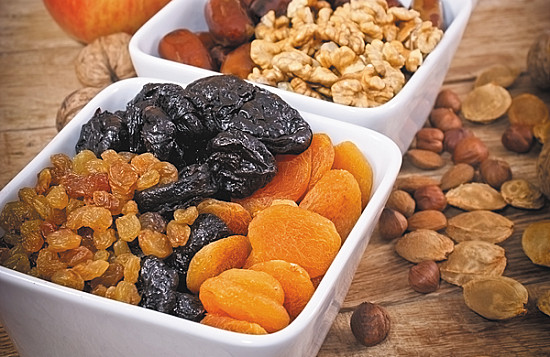
A balanced diet is mostly a question of what fills your plate most days, not any single food. Whole foods — fruit, vegetables, whole grains, protein, healthy fats — give you steady energy through the day; a diet built mostly around processed snacks tends to leave you hungrier sooner, since there is less fibre and protein to slow things down.
Where dates fit into that
One date carries a little over 5 grams of carbohydrate, most of it sugar, and around half a gram of fibre in a Kedai Kurma-sized piece. Dates are naturally high in fructose, which is why they taste sweeter than their sugar content alone would suggest — but the fibre alongside that sugar means they digest more slowly than a spoon of table sugar would. As a date ripens, the sugar content rises and the fibre drops, so a fresher, firmer date generally has a slightly better fibre-to-sugar ratio than a very soft, fully ripened one.
Dates are not a meaningful protein source — a handful gives you barely a gram — so pair them with something that is: nuts, yoghurt, or a handful of seeds. Where they do pull weight is minerals: potassium, magnesium and a bit of iron, plus B vitamins like folate.
A realistic way to use them
Three or four dates chopped into porridge, blended into a smoothie, or eaten alongside a handful of almonds work as a simple whole-food swap for a sugary snack bar — same sweetness, more fibre, a mineral or two you'd otherwise miss. That is the honest case for including them: not a cure for anything, just a better-built sweet snack than most of the alternatives on a convenience-store shelf.
For more on the different varieties and what each is suited for, see our Iranian Mazafati dates and healthy food categories.