

Dates in the third trimester: what we know
Dates are one of the foods most often suggested for this stage. Some small studies suggest that dates for pregnant women may help with labour and with the first days after birth, but the reviewers who pooled those studies rate the evidence as weak.
This article looks at what is in a date, what the labour studies actually found, and how to eat dates sensibly in the last weeks of pregnancy.
This article is general information, not medical advice. Talk to your midwife or doctor before changing your diet in pregnancy, especially if you have gestational diabetes.
What is in a date
Dates are a natural source of carbohydrate and fibre. 100 g of Medjool dates (about four fruits) gives 277 kcal and 75 g of carbohydrate, 66 g of it sugar, plus 6.7 g of fibre (USDA). In a UAE study, five date varieties had glycaemic index values of about 46 to 55 (Alkaabi 2011), so they raise blood sugar less sharply than glucose. They are still a sugary food.
The same 100 g has 696 mg of potassium, 54 mg of magnesium, 64 mg of calcium, 0.9 mg of iron and 0.25 mg of vitamin B6 (USDA). The fibre is the most useful part for late pregnancy: the NHS advice for constipation in pregnancy is to eat high-fibre foods, fruit included, exercise regularly and drink plenty of water (NHS). For leg cramps, the same NHS page suggests gentle exercise and foot stretches. It does not mention any food, and we found no study showing that dates prevent cramps.
What the labour studies found
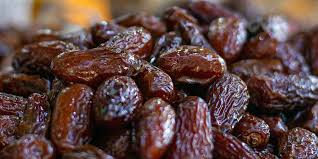
The best-known study comes from Jordan and was published in the Journal of Obstetrics and Gynaecology in 2011. 69 women ate six dates a day for the four weeks before their due date and were compared with 45 women who ate none. The date group arrived at hospital more dilated (3.52 cm against 2.02 cm), more of them went into labour on their own (96% against 79%), fewer needed prostin or oxytocin (28% against 47%), and the early, latent phase of labour was shorter (510 against 906 minutes). The study was not randomised, and the authors said a randomised trial was needed (Al-Kuran 2011).
A 2024 review pooled 48 studies. Eating dates in late pregnancy was linked with shorter labour, less need for induction, more cervical dilation on admission and higher Bishop scores. But the reviewers rated the overall quality of the evidence as "unacceptable", found a high risk of bias in most studies, and noted that safety was recorded in only four trials. They concluded that better-designed studies are needed (Salajegheh 2024).
Eating dates late in pregnancy is a long tradition in Middle Eastern cultures. The studies are a reason to take that tradition seriously. They are not proof that dates make labour easier, and nobody has shown how dates would act on the uterus.
Claims about dates and labour that go too far
You will often read three explanations for why dates might help labour. We could not find any of them shown in pregnant women:
- That dates contain substances that act like oxytocin and soften the cervix. No human study we found measured this.
- That their sugars "energise" the uterine muscles so contractions work better. The labour studies measured timing and interventions, not how the muscle works.
- That tannins and antioxidants in dates balance hormones or trigger prostaglandins. We found no evidence for this in people.
Women in the date groups did have fewer interventions in some studies, as shown above. Why that happened is not known.
Energy and tiredness in the third trimester
Later in pregnancy, you may feel tired because of the extra weight you are carrying, and the NHS advice is plenty of rest (NHS). Dates are a quick, easy snack, and two or three with a glass of milk or a few nuts make a filling one. They will not fix tiredness caused by poor sleep or low iron.
For a sweet food, dates have a moderate effect on blood sugar (Alkaabi 2011). That does not make them a slow-release energy food, and the potassium and magnesium in them have not been shown to prevent cramps.
Iron deficiency anaemia is common in pregnancy, most often because of too little iron in the diet (NHS). Dates are not the answer to that on their own: 100 g has under 1 mg of iron (USDA), and women aged 19 to 49 need 14.8 mg a day (NHS). The 2024 review found that dates in the third trimester raised haemoglobin in the trials it pooled, with the same "unacceptable" evidence quality (Salajegheh 2024). If your midwife says your iron is low, follow the treatment they prescribe.
Fibre and constipation
Constipation is one of the most common discomforts during pregnancy. Hormonal changes, reduced physical activity, and increased pressure on the intestines can slow down digestion. Dates are a good source of fibre, 6.7 to 8 g per 100 g (USDA; USDA), and fruit is on the NHS list of high-fibre foods that help prevent constipation in pregnancy. The NHS also notes that iron supplements can cause constipation and suggests asking your doctor whether you can manage without them or switch to a different type (NHS).
In a small trial in healthy adults who were not pregnant, seven dates a day for three weeks increased bowel movements but did not significantly change gut bacteria (Eid 2015). Claims that dates improve nutrient absorption or immunity through the gut are not backed by that study.
Fibre does not make dates safe in any amount if you have gestational diabetes. Gestational diabetes is high blood sugar that develops during pregnancy, and it is more common in the second or third trimester (NHS). If you have it, ask your diabetes team how dates fit into your meal plan.
Calcium and the baby's bones
Dairy foods are important in pregnancy because they contain calcium (NHS), and adults need 700 mg of calcium a day (NHS). Dates have a little: 39 to 64 mg of calcium and 62 mg of phosphorus per 100 g (USDA; USDA).
So dates add a small amount, while milk, yoghurt and cheese do most of the work for calcium.
After the birth
After childbirth, a mother needs food and energy to recover and to breastfeed. In a small randomised trial, 25 breastfeeding mothers who ate 10 dates a day for four weeks made more breast milk (up 11% at two weeks and 23% at four weeks) than 23 mothers who did not. Their babies' weight-for-age did not differ (Modepeng 2021).
In a trial of 98 women at a hospital in Rasht, Iran, those given 100 g of dates two hours after a normal delivery had somewhat less bleeding over the next 24 hours than the control group, measured with a picture chart (Niknami 2023). These are single small studies. Dates do not replace the care midwives give to control bleeding after birth.
How to include dates in a pregnancy diet
Eat them plain, blend them into a smoothie, or stuff them with a nut or two for some protein. Some women soak them overnight so they are softer.
Chopped dates go well in oatmeal, yoghurt or cereal, and can replace some of the sugar in baking. They are still sugar, so count them the same way.
If you plan to eat six a day for four weeks, that is about 170 dates, so buying wholesale kurma by the box can make sense. kurma bam, the Mazafati date from Bam in Iran, is soft and moist and goes well with nuts or milk.
How many dates, and precautions
There is no official recommended amount. The Jordanian study used six dates a day for the last four weeks before the due date (Al-Kuran 2011), and that is the figure most often quoted. Six Medjool dates weigh about 144 g and carry about 400 kcal; six small Deglet Noor dates weigh about 43 g and carry about 120 kcal (USDA; USDA). The variety makes a big difference. Women with gestational diabetes or other medical conditions should consult their healthcare provider before increasing their date intake.
Keep dates in a cool, dry place, and rinse them before eating to wash off any dust.
Dates in the story of Maryam
The use of dates in pregnancy has roots in old traditions, particularly in Middle Eastern cultures. In the Qur’an, Surah Maryam tells how the pains of labour drove Maryam (Mary), mother of Isa (Jesus), to the trunk of a palm tree. She was told: “And shake the trunk of this palm tree towards you, it will drop fresh, ripe dates upon you,” and then to eat, drink and be content (Qur’an 19:23–26).
The verses describe dates and water given to Maryam in labour. They are a story of comfort and provision, not a medical claim. For many Muslim families the story is a reason to eat dates in late pregnancy, and the small studies above are why researchers have started to test the practice.
Conclusion
Dates are a convenient source of energy and fibre, with some potassium and magnesium, and they fit easily into a varied diet.
Small studies link eating dates in late pregnancy with less need for induction and a shorter early phase of labour, and after birth with more breast milk and a little less bleeding. Reviewers rate this evidence as weak. Dates are a reasonable food to enjoy, not a proven way to change how labour goes.
If you want to try dates for pregnant women in the last weeks, talk to your midwife first, keep to a sensible portion, and count them as part of your sugar for the day.
References
- Al-Kuran O, et al. The effect of late pregnancy consumption of date fruit on labour and delivery. J Obstet Gynaecol. 2011;31(1):29-31. doi:10.3109/01443615.2010.522267. PubMed 21280989
- Salajegheh Z, et al. Is oral consumption of dates in the peripartum period effective and safe integrative care to facilitate childbirth and improve perinatal outcomes: a comprehensive revised systematic review and dose-response meta-analysis. BMC Pregnancy Childbirth. 2024;24(1):12. doi:10.1186/s12884-023-06196-y. PubMed 38166785
- Modepeng T, et al. The effects of date fruit consumption on breast milk quantity and nutritional status of infants. Breastfeed Med. 2021;16(11):909-914. doi:10.1089/bfm.2021.0031. PubMed 34252286
- Niknami M, et al. The effect of date fruit consumption on early postpartum hemorrhage: a randomized clinical trial. BMC Womens Health. 2023;23(1):441. doi:10.1186/s12905-023-02604-9. PubMed 37612639
- Alkaabi JM, et al. Glycemic indices of five varieties of dates in healthy and diabetic subjects. Nutr J. 2011;10:59. doi:10.1186/1475-2891-10-59. PubMed 21619670
- Eid N, et al. Impact of palm date consumption on microbiota growth and large intestinal health: a randomised, controlled, cross-over, human intervention study. Br J Nutr. 2015;114(8):1226-36. doi:10.1017/S0007114515002780. PubMed 26428278
- USDA FoodData Central: Dates, medjool (168191); Dates, deglet noor (171726).
- NHS: Common health problems in pregnancy; Tiredness and sleep problems in pregnancy; Iron deficiency anaemia; Iron; Gestational diabetes; Have a healthy diet in pregnancy; Calcium.
- Qur’an, Surah Maryam 19:23–26 (The Clear Quran translation, quran.com).